Consorzio per la promozione turistica della Valchiavenna

Stazione Ferroviaria Chiavenna
Piazza Caduti per la Libertà
23022 Chiavenna (SO)
consorzioturistico@valchiavenna.com

Via Bregaglia Between Valchiavenna and Switzerland

Valchiavenna

The Via Bregaglia is a hiking route connecting Switzerland’s Bregaglia Valley with Valchiavenna through historic villages, alpine landscapes, and nature trails, offering an experience that combines culture, history, and mountain scenery. The route is also available as a multi-stage organised trekking package across Switzerland and Italy.

Details

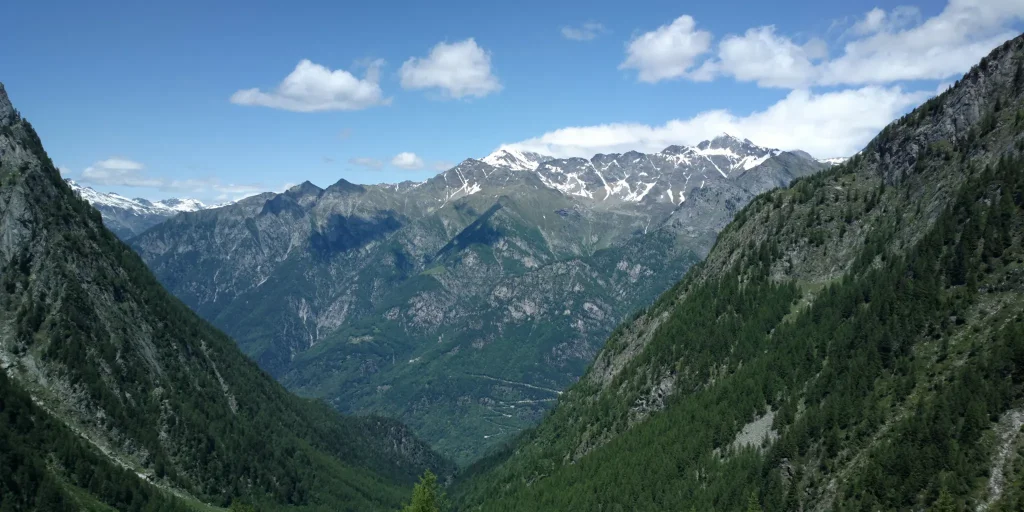
The Via Bregaglia crosses one of the most distinctive alpine regions between Switzerland and Italy, following the valley through mountains, small villages, and landscapes shaped by both nature and human activity. The route follows a network of marked trails and historic paths linking Val Bregaglia to Chiavenna, allowing visitors to discover a variety of environments within a single itinerary.

The trail passes through locations such as Castasegna, Bondo, Soglio, Stampa, and Promontogno, offering a comprehensive insight into the Bregaglia region and its cultural and landscape heritage.

The route winds through forests, meadows, waterways, and villages that still preserve the architectural and cultural identity typical of Alpine valleys. Along the way, visitors encounter traces of mountain life, agriculture, trade, and the historic connections between Northern Europe and Italy.

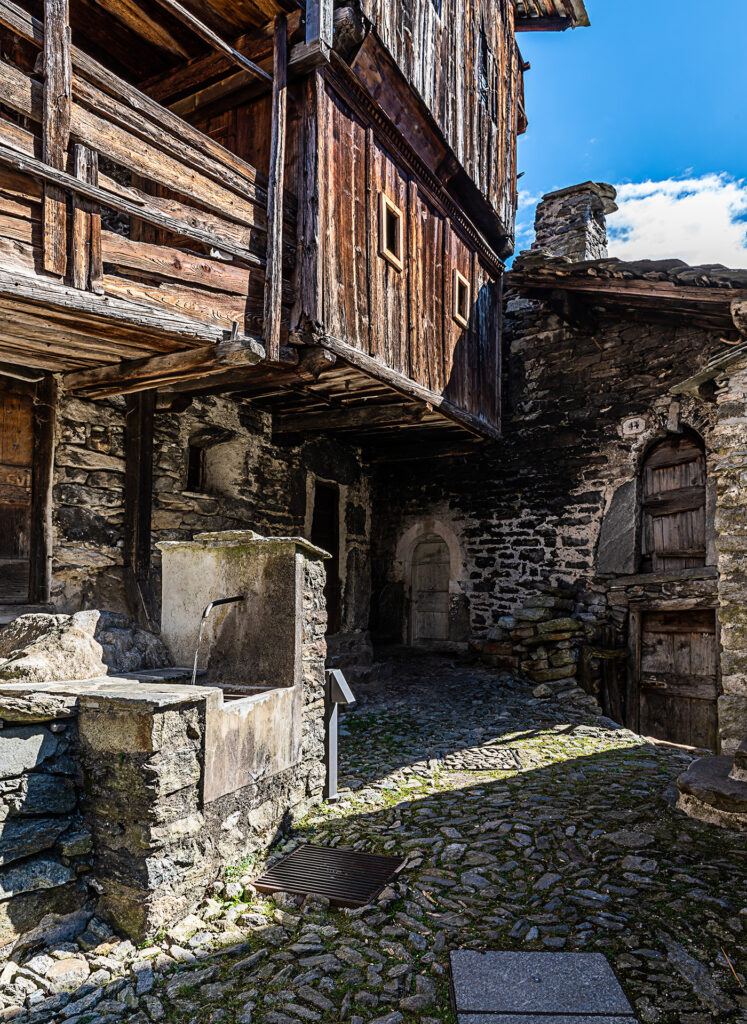
One of the most distinctive aspects of the Via Bregaglia is the constant relationship between natural landscapes and human presence. The itinerary alternates between open panoramic sections and passages through historic village centres, where stone houses, churches, and traditional architecture tell the story of the valley and its communities.
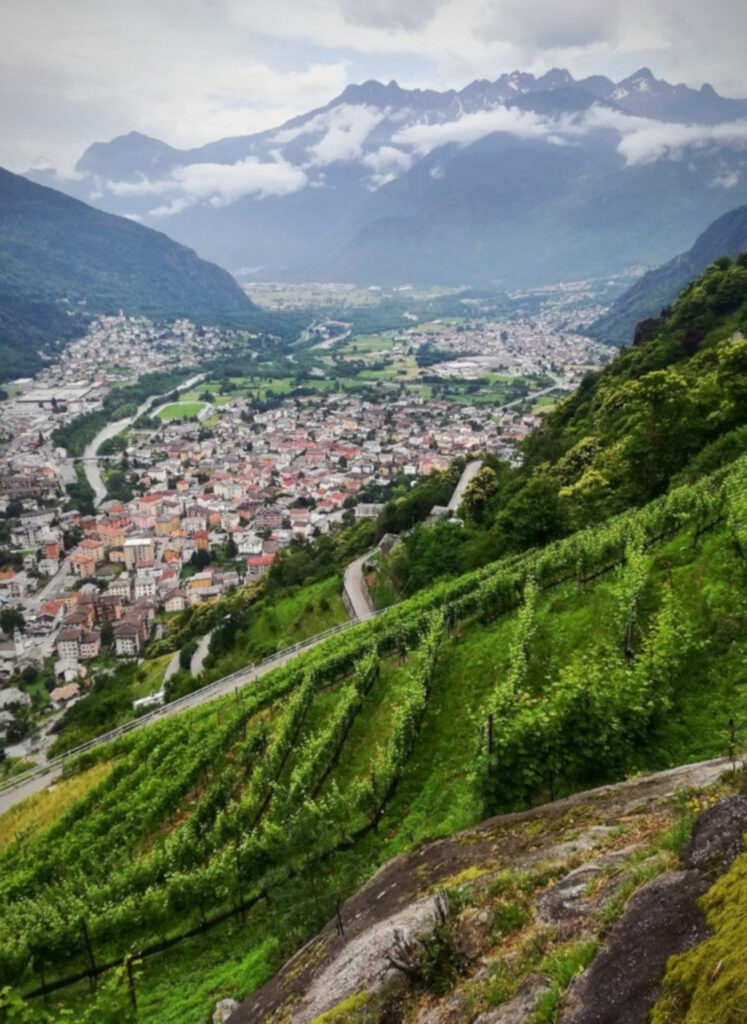
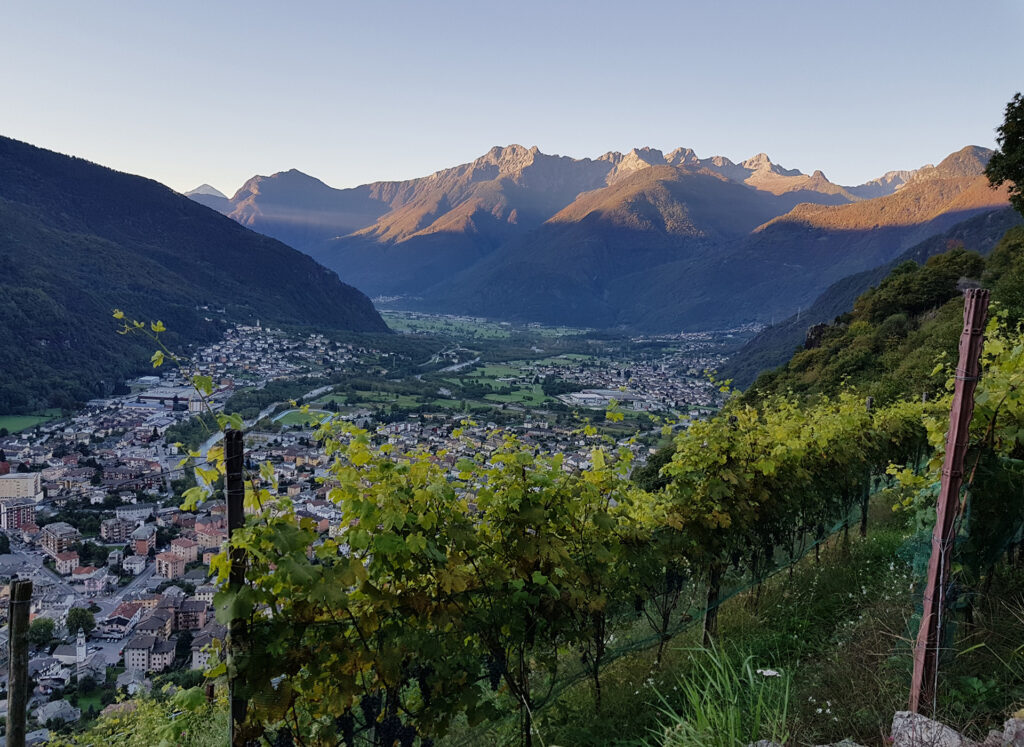
The route also showcases the remarkable landscape diversity of this alpine region. From the higher elevations of Bregaglia down to the valley floor of Chiavenna, the scenery gradually changes from rugged mountain environments to more open areas characterised by vineyards, chestnut groves, and waterways.

The Via Bregaglia is not only a nature trail but also a cultural itinerary that offers insight into the history and traditions of a region long connected to Alpine crossings. Over the centuries, these routes were travelled by merchants, travellers, and local communities, contributing to the valley’s economic and cultural development.

Thanks to the variety of landscapes it crosses, the route is suitable both for hikers seeking long-distance trekking experiences and for those who prefer shorter individual stages, enjoying the alpine scenery at a slower pace. The multi-stage format, together with organised services, accommodation options, and luggage transport, also makes the Via Bregaglia particularly suited to experiential trekking and slow tourism.

Today, the Via Bregaglia offers the opportunity to explore a region where nature, history, and Alpine identity remain closely connected, guiding visitors through mountain scenery, cultural landmarks, and villages that continue to preserve a strong connection to their origins.

Informations
Infopoint
Consorzio Turistico Valchiavenna
Piazza Caduti per la Libertà, 4
23022 Chiavenna (SO)
0343 37485
consorzioturistico@valchiavenna.com

Traditional Desserts: The Sweet Taste of The Mountains

Valchiavenna

In the heart of Valchiavenna, desserts also tell an ancient story of ingenuity, simplicity and genuine flavours. Every ingredient comes from the land and is transformed into memory, celebration and comfort.

Details

Flour is the foundation of many traditional recipes, and its heritage is preserved at the Bottonera Mill, a historic 19th-century mill that now serves as a museum. Here, visitors can discover the legacy of a working culture in which water, stone and time combined to produce everyday food.
Butter carries the fragrance of alpine pastures, while sugar, spices and dried fruits arrived as early as the Middle Ages through transalpine trade routes that connected different cultures and regions.

Among the most beloved specialities are Biscotìn de Pròst, a classic local biscuit. The original recipe is still produced today by the Del Curto Mill in Prosto di Piuro, where the Del Curto sisters carefully preserve a recipe passed down through generations. Made from simple ingredients such as flour, sugar and butter, these biscuits are the result of long-standing artisanal expertise. Each biscuit reflects care and local identity and is often still wrapped by hand in colourful paper that highlights its authenticity.

Torta Fioretto takes its name from wild fennel flowers, which give the cake its distinctive aroma. It is a simple and fragrant preparation in which leavened dough combines with butter and sugar to create a balance of rustic and delicate flavours.

Finally, Oss de Mord represent the crunchy side of local tradition. These dry biscuits are enriched with almonds and egg whites and can be enjoyed on their own or paired with sweet wine. Alongside them are Montagnoli, small pastries enriched with raisins.
These desserts embody the simplest and most authentic soul of the mountains: ancient gestures, essential ingredients and flavours that evoke the warmth of home.

Infopoint
Consorzio Turistico Valchiavenna
Piazza Caduti per la Libertà, 4
23022 Chiavenna (SO)
0343 37485
consorzioturistico@valchiavenna.com

Passito Vertemate: The Elegance of Time Between History and Vineyards

Valchiavenna

In the heart of Prosto di Piuro, at the foot of the mountains and within the magnificent estate of Palazzo Vertemate Franchi, a rare and precious wine is produced—one that brings together history, landscape and patience. Passito Vertemate is more than a wine: it is a sensory experience that tells the story of a unique place.

Details

When people think of dessert wines, they often imagine sun-drenched Mediterranean landscapes. Yet among the Alps of Valchiavenna, an extraordinary passito wine is produced from grapes grown in a historic vineyard dating back to the 16th century.

Harvest takes place in mid-September. The grapes are carefully picked and left to dry naturally for four months in dedicated drying rooms, allowing aromas, sugars and fragrances to become concentrated over time. Fermentation and one year of ageing in wooden barrels then create a wine that is intense, elegant and complex.

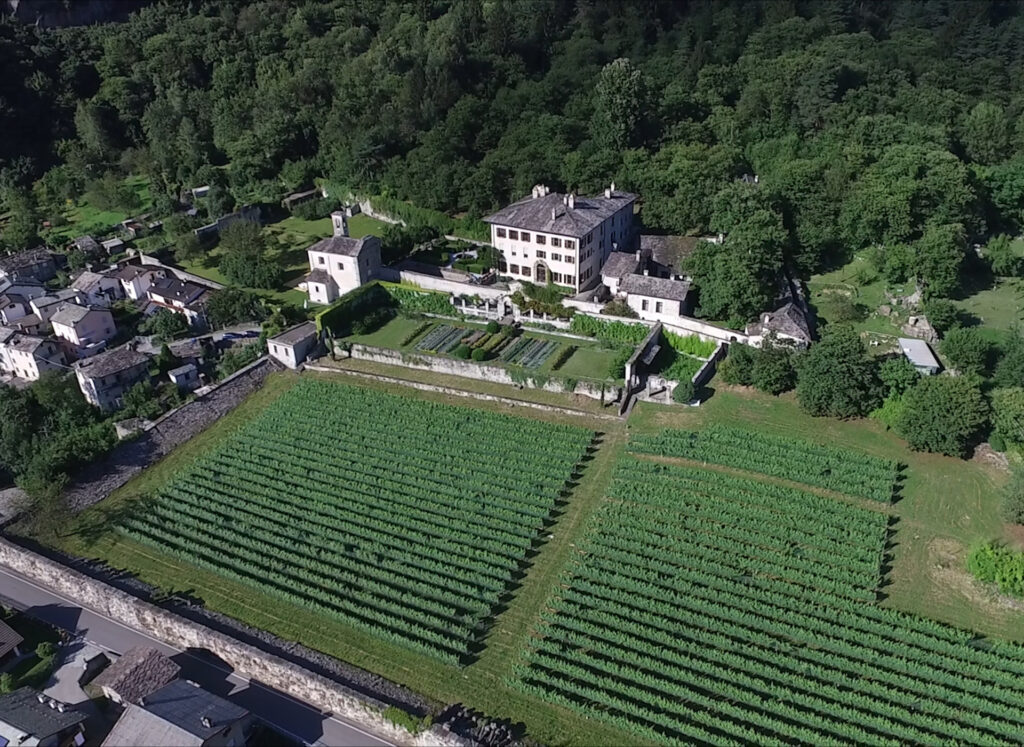
The Vertemate vineyard is deeply connected to the history of the Renaissance palace built by the Vertemate Franchi brothers, the only significant structure to survive the devastating landslide of 1618 that destroyed the ancient village of Piuro. Today, the estate retains its timeless charm, with frescoed rooms, gardens and vineyard rows overlooking the valley.

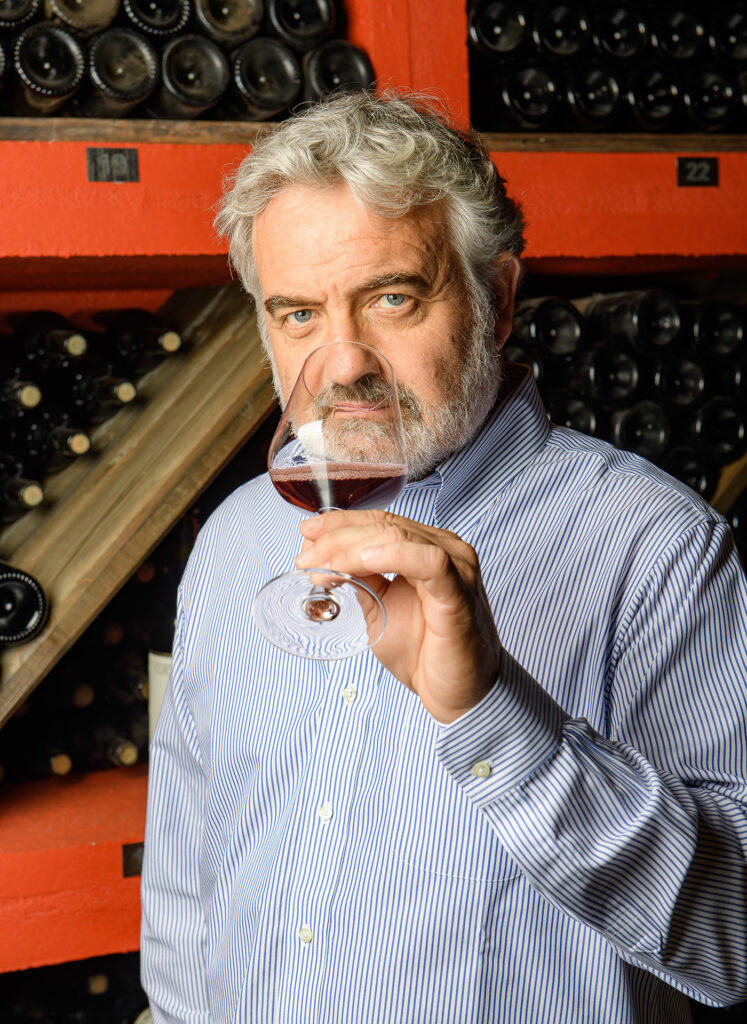
In the early 2000s, a project was launched to restore the historic vineyard and return it to its former beauty. Since 2005, Mamete Prevostini has overseen the production of Passito Vertemate, transforming it into one of the most sought-after wines of the region.

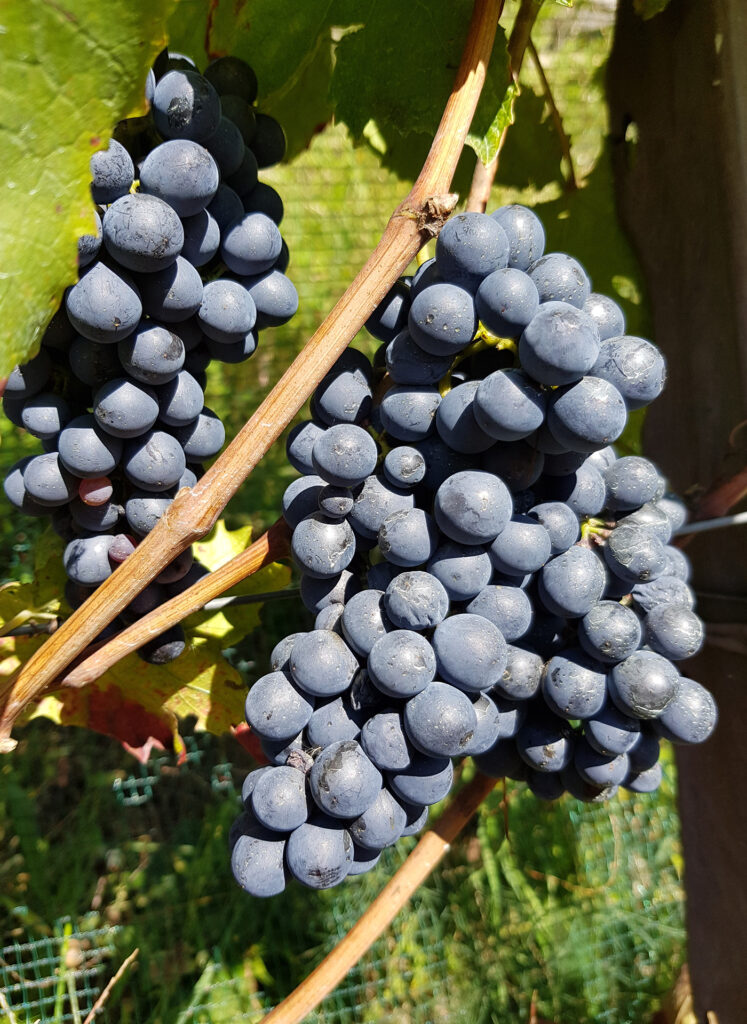
The vineyard covers approximately 7,000 square metres and is planted with northern European varieties such as Gewürztraminer and Rhine Riesling, which express a refined balance of freshness, aromatic intensity and structure.
Every bottle reflects the patience of time, the value of tradition and the beauty of a landscape that continues to live through wine. A rare passito born among history, art and mountains.

Infopoint
Consorzio Turistico Valchiavenna
Piazza Caduti per la Libertà, 4
23022 Chiavenna (SO)
0343 37485
consorzioturistico@valchiavenna.com

Bregaglia Terraces Between Savogno, Dasile and Corbia

Valchiavenna

The Bregaglia Terraces in Valchiavenna are a hiking route linking the villages of Savogno, Dasile and Corbia, offering spectacular views across the valley and a journey through nature, history and Alpine landscapes.

Details

The route follows the sunny side of the valley above Piuro and Chiavenna, connecting three historic settlements located at different elevations. Savogno, Dasile and Corbia are linked by a trail that combines more demanding hiking sections with panoramic walks, allowing visitors to discover some of the most remarkable scenery in Valchiavenna.

The route can be accessed in different ways. One of the best-known options starts in Borgonuovo di Piuro, near the Acquafraggia Waterfalls, where an ancient mule track climbs the mountainside through terraced landscapes and chestnut woods. This section is steep and best suited to experienced hikers.

Alternatively, visitors can start from Villa di Chiavenna along a gentler unpaved road with panoramic views or drive higher up the mountain with a daily permit to reduce the initial elevation gain.

The first destination is Savogno, located at around 1,000 metres above sea level on a natural terrace overlooking the valley. Reached after about an hour’s ascent from the valley floor, the village retains a compact layout of narrow, steep lanes clustered around a church consecrated in 1465.

From here, visitors enjoy sweeping views that also include the area affected by the 1618 landslide that destroyed the ancient village of Piuro, adding historical significance to the landscape.

Continuing along the trail and crossing a bridge over the stream leads to Dasile, approximately 200 metres higher than Savogno. This small settlement lies at the edge of a grassy basin and offers one of the most impressive viewpoints along the route.

From Dasile, the view extends across much of the valley, including the Chiavenna plain, nearby towns such as Gordona and Mese, and the peaks surrounding Val Bodengo and neighbouring valleys. Its location makes it one of the most scenic “terraces” of the entire route.

For those wishing to continue, the trail proceeds to Corbia at around 1,500 metres above sea level. The path becomes steeper and more demanding, leading to an ancient mountain pasture settlement where only a few alpine huts remain.

From Corbia, the panorama expands even further, offering an immersive view of the surrounding Alpine landscape in a more remote and unspoilt setting.

One of the defining features of this itinerary is the variety of landscapes encountered along the way. Hikers pass through chestnut forests, terraces, meadows and open areas, with constantly changing perspectives. During autumn, the colours of the foliage transform the mountainside into a succession of warm shades, making the experience particularly memorable.

The Bregaglia Terraces are more than a hiking route; they are a journey through nature, history and Alpine culture. The villages along the trail tell the story of mountain life and land management, while the viewpoints provide a broad and continuous perspective over the valley.

Walking this route means exploring a layered landscape where each stage reveals a deeper understanding of Valchiavenna and offers a rewarding combination of hiking, observation and discovery.

Informations

Main Access Points: Borgonuovo di Piuro, Villa di Chiavenna.
Daily permits available for vehicle access on the unpaved road.

Infopoint
Consorzio Turistico Valchiavenna
Piazza Caduti per la Libertà, 4
23022 Chiavenna (SO)
0343 37485
consorzioturistico@valchiavenna.com

Belfòrt: Medieval Archaeological Site in Valchiavenna

Valchiavenna

Belfòrt in Valchiavenna is a historical and archaeological site near Piuro, where excavations have uncovered important medieval remains, offering visitors a journey through ruins, nature and ongoing research.

Details

Located a short distance from Chiavenna, Belfòrt is one of the most fascinating places for understanding the history of Valchiavenna through its material remains. Rather than being a fully developed museum site, it is a constantly evolving area where archaeological research continues to expand knowledge of the location.

Belfòrt occupies a strategic position along one of the main Alpine routes, reflecting the central role that Valchiavenna has played for centuries as a corridor for travel and trade. This location encouraged the development of settlements and structures that accumulated over time, leaving traces now revealed through archaeological investigations.

Excavations have brought to light building remains, masonry structures and living spaces belonging to different historical phases, particularly from the medieval period. These discoveries provide valuable insight into the organisation and functions of the settlement, offering a tangible glimpse into everyday life in the past.

What makes Belfòrt especially interesting is its open and evolving nature. The site is not static but continues to change as new discoveries emerge. Visitors are therefore able not only to observe the past but also to witness a process of historical understanding that is still ongoing.

The visitor route unfolds within a natural setting that enhances the overall experience. Vegetation, landscape and the quiet atmosphere of the area create a reflective environment, encouraging careful observation of the remains.

Belfòrt is not a monumental site in the traditional sense but rather a place to be interpreted, where each element invites deeper exploration. This quality makes it particularly significant: not simply a point of interest, but a space where history, archaeology and landscape come together.

Visiting Belfòrt means discovering a less visible yet fundamental aspect of Valchiavenna, shaped by layers of history, transformation and continuous research. It is a place where the past emerges gradually through the work of archaeologists and the passage of time.

Informations

Free access (please check for any local restrictions).

Infopoint
Consorzio Turistico Valchiavenna
Piazza Caduti per la Libertà, 4
23022 Chiavenna (SO)
0343 37485
consorzioturistico@valchiavenna.com

Soapstone in Valchiavenna

Valchiavenna

Soapstone in Valchiavenna is a metamorphic Alpine rock that has been used since ancient times to produce cookware, architectural elements and handcrafted objects, representing one of the area's most deeply rooted traditions.

Details

In Valchiavenna, soapstone is far more than a material: it is a constant presence in the history, craftsmanship and daily life of Alpine communities. It is a variety of serpentine rich in talc and chlorite, characterised by a relatively soft texture and high heat resistance, making it particularly suitable for carving and domestic use.

Its main extraction areas are located between Chiavenna, Piuro and Val Bregaglia, where the stone was quarried from underground tunnels known as trone, often deep and difficult to access.

From these quarries, rough blocks were extracted and transformed through a long process of manual craftsmanship into everyday objects, most notably laveggi (lavéec), stone cooking pots traditionally used for food preparation.

The use of soapstone in the valley dates back to ancient times. Archaeological evidence documents its use as early as prehistoric periods, while historical and literary sources confirm its presence during Roman times.

For centuries, soapstone working was one of the area’s main crafts, contributing significantly to the valley’s economy and reputation far beyond local borders.

Its popularity stemmed from its remarkable properties. Soapstone absorbs and releases heat slowly, allowing food to cook evenly at low temperatures, making it ideal for stews and braised dishes.
ù
It also preserves the natural flavours of ingredients and often allows cooking without added fats.

Alongside laveggi, artisans produced cooking slabs known as piòte, food storage containers and, more recently, decorative and design objects.

Soapstone has also left a visible mark on local architecture and art. Baptismal fonts, portals, columns, fountains and decorative details throughout Chiavenna testify to its use in construction and artistic works.

In this sense, the stone has become an integral part of the urban landscape and a defining element of the area’s visual identity.

Following a gradual decline during the nineteenth and twentieth centuries, caused by the introduction of new materials and industrial techniques, soapstone craftsmanship has experienced a revival thanks to the efforts of a small number of local artisans.

Among them, the workshop in Piuro is now a key centre for preserving and promoting this tradition, where visitors can observe traditional techniques and discover contemporary products.

Today, soapstone remains a symbol of Valchiavenna: a material that reflects the relationship between people and mountains, natural resources and culture. Discovering it means connecting with a tradition that combines geology, craftsmanship and gastronomy, offering an authentic perspective on the region.

Informations

For further information about soapstone craftsmanship and products:
Official website: www.pietraollare.com

Infopoint
Consorzio Turistico Valchiavenna
Piazza Caduti per la Libertà, 4
23022 Chiavenna (SO)
0343 37485
consorzioturistico@valchiavenna.com

Acquafraggia Waterfalls in Val Bregaglia

Valchiavenna

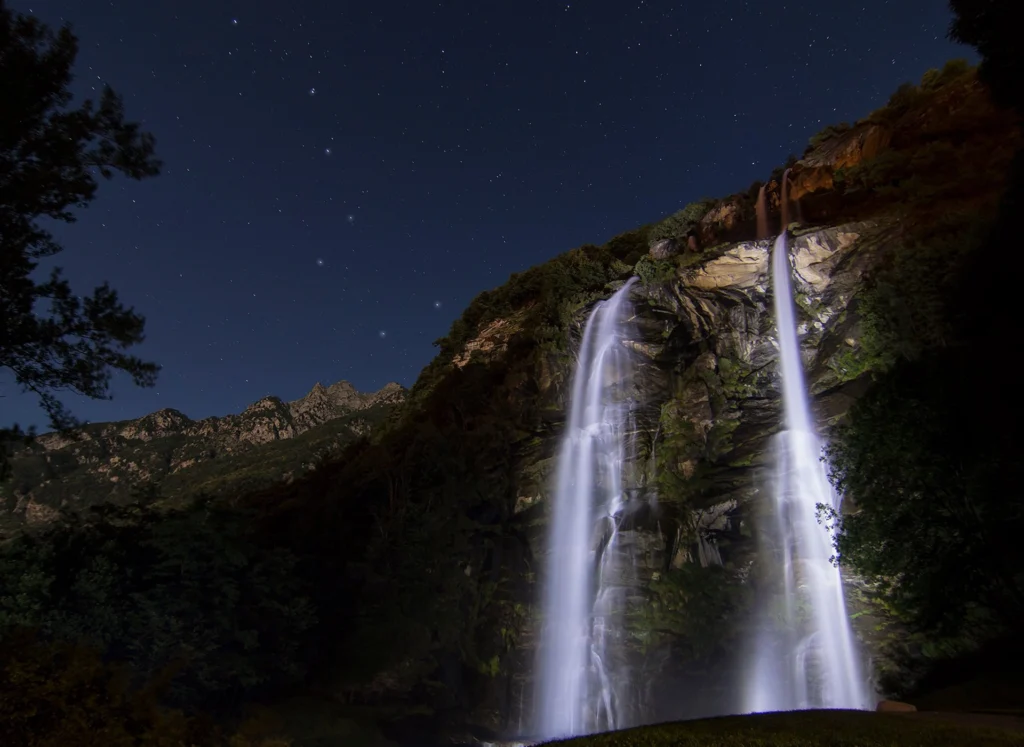
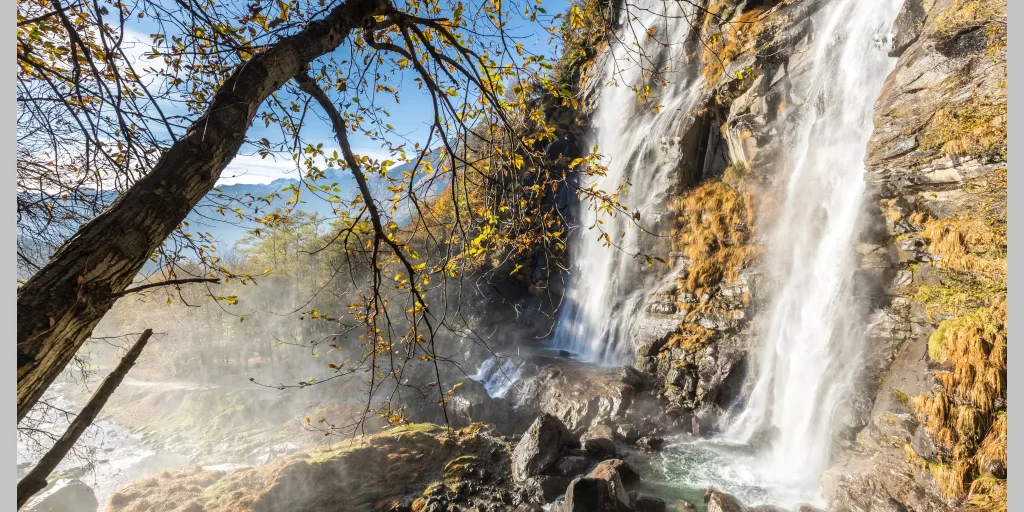
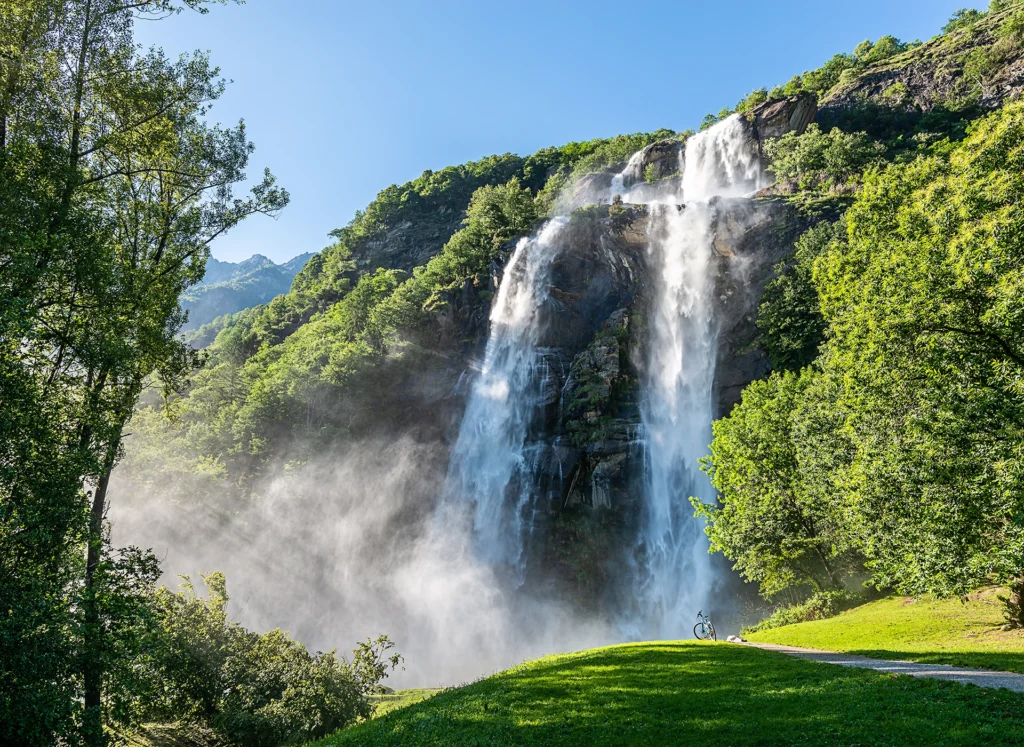
In the heart of Val Bregaglia, where mountains open up and water plunges dramatically through the landscape, lies one of the area’s most impressive natural attractions: the Acquafraggia Waterfalls. Originating from Pizzo di Lago among hanging valleys and ancient glaciers, the stream descends through a series of cascades whose powerful flow breaks the silence, creating a spectacle of light, spray, and movement. The name “Acquafraggia” derives from the Latin aqua fracta, meaning “broken water”, referring to the way the stream divides into multiple waterfalls along its course.

Details

Their beauty even impressed Leonardo da Vinci, who celebrated them in his Codex Atlanticus, highlighting their distinctive double-drop formation that remains one of the most iconic features of the landscape today. The waterfall area is now organised as a natural park, easily accessible and designed to allow visitors to reach various panoramic viewpoints and experience the power and dynamism of the water at close range. Surrounded by chestnut trees, broom shrubs, and rocks sculpted by the stream, the waterfalls unfold in a series of spectacular drops that are also visible from the road, making them one of the most recognisable and visited natural landmarks in Valchiavenna.

The environment surrounding the waterfalls is characterised by rich and diverse vegetation, sustained by the constant presence of water. Mosses, ferns, and distinctive plant species thrive here, creating a unique ecosystem. Over time, the erosive force of the stream has shaped the rock into remarkable formations that tell the story of this Alpine landscape’s natural evolution.

Within the park, equipped areas, observation points, and green spaces allow visitors to enjoy the waterfalls in an accessible and immersive way, without the need for demanding hiking routes. Water remains the undisputed protagonist, accompanying visitors with its constant sound and creating an evocative atmosphere throughout the year.

Among cascading waters and towering rock walls, visitors can sense both the power of the past and the vitality of the present. The waterfalls are more than a natural phenomenon: they are a complete sensory experience, an invitation to contemplate the greatness of nature and humanity’s fragility in the face of such beauty. Watching the water in its endless motion, every visitor leaves with a lasting sense of wonder.

Informations

SUMMER 2026 ACCESS REGULATIONS

Paid admission during the following periods:

30–31 May
08:30 – 18:30

From 1 June to 19 July
Weekends and public holidays: 08:30 – 18:30

From 25 July to 31 August
Every day: 08:30 – 18:30

From 1 September to 13 September
Weekends and public holidays: 08:30 – 18:30

Admission Fees
Full ticket: €3
Free admission for:
– Residents of Valchiavenna
– Visitors with disabilities
– Visitors over 75
– Children under 5 years old.

Infopoint
Consorzio Turistico Valchiavenna
Piazza Caduti per la Libertà, 4
23022 Chiavenna (SO)
0343 37485
consorzioturistico@valchiavenna.com

Acqua Fraggia waterfall scenic loop – Savogno

Valchiavenna

Acqua Fraggia waterfall scenic loop - Savogno

Details

Start at the base of the impressive falls, where, among the meadows to their right, a path crosses a small stream. From here, on the left, you are in the vicinity of the last houses of the Sarlone district; still on the left, along the path through dense woods, you quickly ascend to the first jump of the falls, easily passable thanks to the stairs that cover some sections. At the second jump, it is possible to admire from special vantage points the landscape in all its magnificence. And up to the second fork, from where, on the left, a rope bridge introduces to the opposite side of the stream, to take the right at a second fork. Returning to the original slope after crossing another bridge, you rejoin the cobbled path leading to Savogno (m 932 a.s.l.). An extraordinary panorama then opens up to view from the churchyard, from which to delve into the exploration of the village, rich in glimpses and suggestive details. Until the descent, common for a first stretch to the ascent, continues on the main cobbled path, first to the Crotti di Savogno and then to the Stalle dei Ronchi; finally closing at Sarlone, the starting point.

Edited by Consorzio Tutela Bresaola della Valtellina

Informations

Difficulty: Easy

Duration: 2:10 h

Distance: 3,32 km

Ascent: 501 mt

Descent: 486 mt

Highest point: 924 mt

Lowest point: 424 mt

Best time of year:

Jan
Feb
Mar
Apr
May
Jun
Jul
Aug
Sep
Oct
Nov
Dec

Download the GPX track
Download the KML track

How to get here
Infopoint
Consorzio Turistico Valchiavenna
Piazza Caduti per la Libertà, 4
23022 Chiavenna (SO)
0343 37485
consorzioturistico@valchiavenna.com

Garzonedo in the Aurosina Valley

Valchiavenna

Discovering a little-known place frequented by those who love high-altitude trekking.Garzonedo is located in one of the most beautiful and unspoiled valleys in the area: the Val Aurosina, which climbs imperviously on the left bank of the Italian Bregaglia, in the municipality of Piuro. It is one of the corners that still remain unspoiled in Valchiavenna.

Details

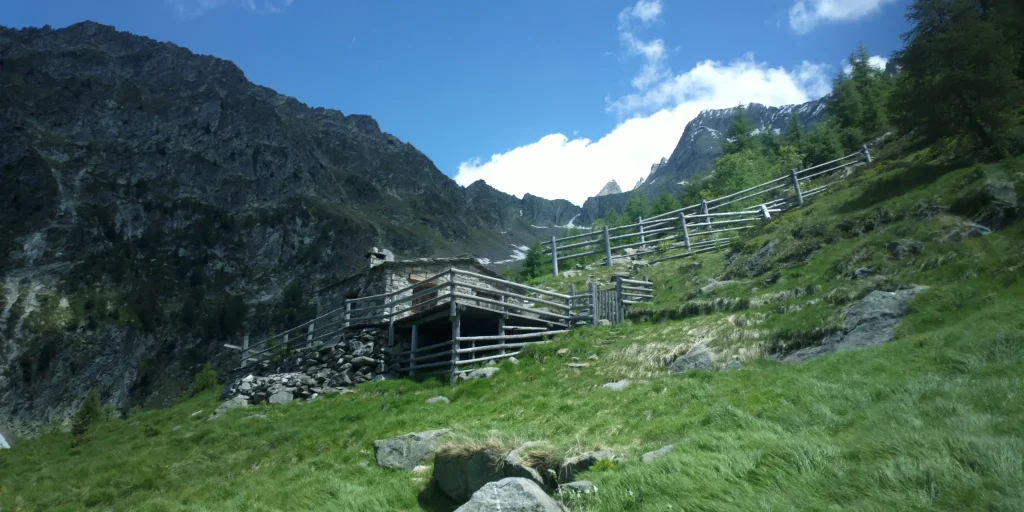
Its difficult geographical conformation, combined with a particularly rich nature, have preserved this stupendous ravine from human action over the years. Impossible not to be captivated by such wild beauty. And it was precisely with those hikers in mind who like to follow the less beaten paths, far from the most frequented routes, that the volunteers of the Cai Chiavenna wanted to build a bivouac that, due to its particular conformation, fits in an almost symbiotic way with the surrounding environment, employing construction materials taken on site: wood and stone.

The bivouac is equipped to accommodate up to eight beds, has a few blankets and a small heater connected to the gas cylinder. It is designed to provide overnight shelter for those who travel long distances on foot or for those caught in a blizzard or stranded in a violent thunderstorm. There are no food supplies, and water, should guests lack it, must be drawn from a nearby stream.

There are several routes that reach Garzonedo.

The most direct is the one that from Santa Croce di Piuro, climbs torturously up to the 1943 meters of the bivouac.For those moving by car, it is possible to leave the vehicle in one of the parking lots in the hamlet, following on foot the signs for Crotto Quartino. From here, continue on the path up the narrow gorge through which the Aurosina stream flows. The starting elevation is about 500m.

The first stop is the nucleus of Tabiadascio at about 1250m elevation. Once past the edge of the forest, it becomes essential to maintain contact with the red and white pass markers. The climb gets tough and gradually, following the repeated switchbacks, you reach Garzonedo, where the bivouac is located, visible thanks to the double red-white coloring on the entrance door. From the bivouac one can head toward Bocchetta di Scilano, at almost 2200 meters above sea level. Alternatively, one can pass by Lago del Grillo, returning to the valley from Uschione, in the municipality of Chiavenna. For any information, it is advisable to make contact with local mountain guides.

Informations

Difficulty: Hard

Duration: 4:40 h

Distance: 6,57 km

Ascent: 1494 mt

Descent: 57 mt

Highest point: 1944 mt

Lowest point: 505 mt

Best time of year:

Jan
Feb
Mar
Apr
May
Jun
Jul
Aug
Sep
Oct
Nov
Dec

Download the GPX track
Download the KML track

How to get here

Public transport: It is possible to reach Santa Croce di Piuro by bus connection STPS line.
For schedules https://www.stps.it/

Getting there: follow the SS37 towards Maloja

Parking: For those moving by car, it is possible to leave the vehicle at one of the parking lots in the hamlet, following the signs to Crotto Quartino on foot.

Starting point: get directions in Google Maps

Infopoint
Consorzio Turistico Valchiavenna
Piazza Caduti per la Libertà, 4
23022 Chiavenna (SO)
0343 37485
consorzioturistico@valchiavenna.com

Palazzo Vertemate Franchi

Details

Built in the second half of the 16th century by the Vertemate Franchi brothers, wealthy merchants from Valchiavenna, the villa stands in a privileged position that allowed it to survive the landslide of 1618, which destroyed the nearby village of Piuro. A harmonious landscape surrounds the palace, including vineyards, orchards, vegetable gardens, an Italian-style garden with a double-exedra fishpond, and a chestnut grove on the mountain slope. These cultivated areas, preserved over the centuries, bear witness to the deep connection between the residence and its surrounding landscape.

After a period of neglect between the 19th and 20th centuries, the villa was restored and furnished with period pieces. Since 1988, it has been a House Museum owned by the Municipality of Chiavenna, which has overseen its restoration and enhancement, gradually extending the museum experience to include the gardens and historic cultivated areas.

The exterior, elegant yet understated, gives little indication of the richness of the interiors. Beyond the rusticated stone portal, visitors enter a frescoed atrium featuring allegories of the four elements and deities such as Juno, Ceres and Bacchus, symbols of the relationship between humankind and nature. The rooms reflect the refined taste of the owners, with carved and decorated wooden ceilings, frescoes inspired by Ovid’s Metamorphoses, and richly furnished interiors.

Among the most striking rooms are the Hall of Juno, decorated with inlaid wood and dated 1577, the Hall of Mercury and Jupiter, and the spectacular Zodiac Hall, where the signs of the zodiac are intertwined with the agricultural activities associated with each month of the year. The upper floors contain the guest bedrooms, including the Bishop’s Room and the room dedicated to Giosuè Carducci, who visited the villa during his stays in Madesimo.

Today, Palazzo Vertemate Franchi is not only a historic residence but also a true cultural centre. Concerts, events and guided visits take place among its gardens, vineyard and panoramic views over the valley, allowing visitors to rediscover the beauty of a place where art, nature and history continue to engage in dialogue over time.

Infopoint
Consorzio Turistico Valchiavenna
Piazza Caduti per la Libertà, 4
23022 Chiavenna (SO)
0343 37485
consorzioturistico@valchiavenna.com

Search in the website