Valchiavenna
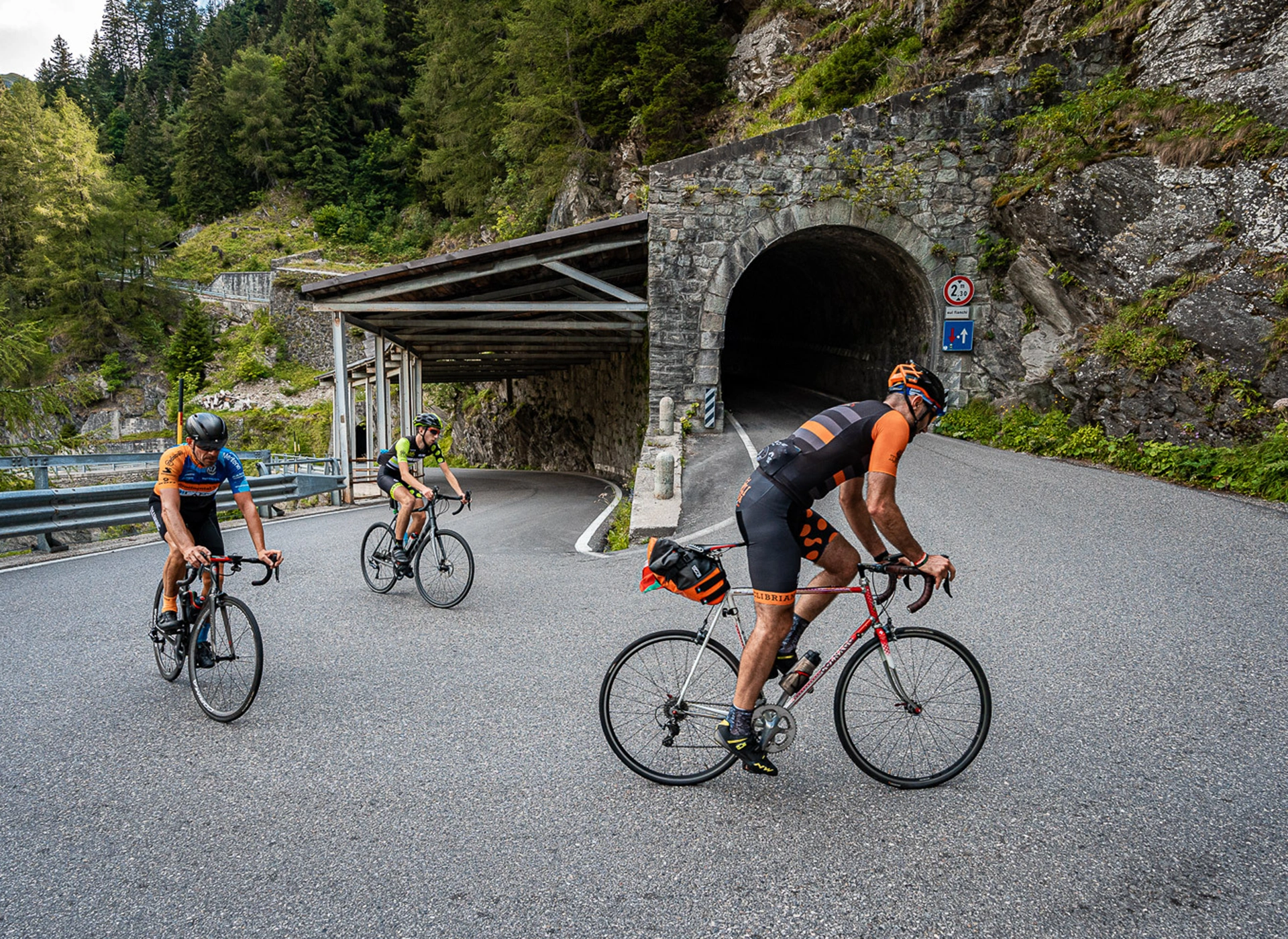
Difficult road bike ride. Good training required. Mostly paved surfaces and easy bike ride.
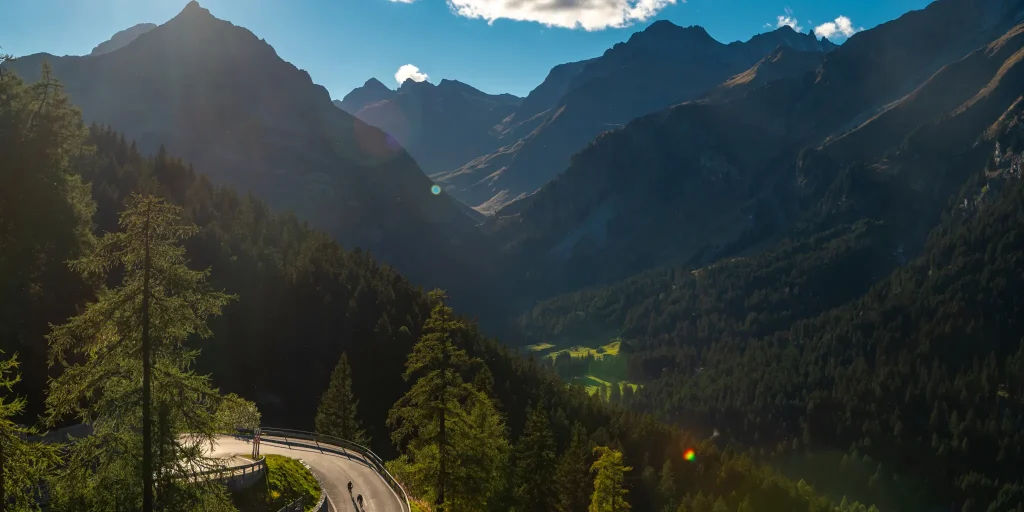
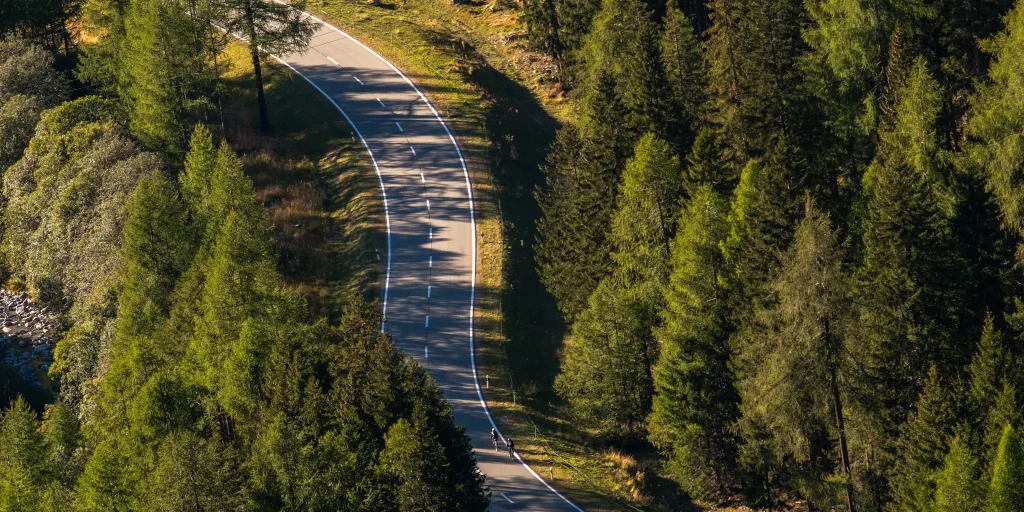
The Maloja Pass is a Swiss pass in the western Rhaetian Alps that connects the Engadine Valley with Valchiavenna.
From the Italian side, the ascent begins in Chiavenna: its length of no less than 32 kilometers and positive elevation gain of about 1,500 make it an undertaking suitable only for those with sufficient training.
From the point of view of gradients, however, there are no major difficulties, except in the last section.
In Villa di Chiavenna there is Swiss customs: don’t forget to take an ID with you!
Difficulty: Medium
Duration: 2:30 h
Distance: 31,79 km
Ascent: 1496 mt
Descent: 10 mt
Highest point: 1815 mt
Lowest point: 327 mt
Best time of year:
Public transport: It is possible to reach Chiavenna by train.
For schedules https://www.trenord.it/
Getting there: By car it is possible to reach Valchiavenna from the south via S.S.36 (Milan-Lecco-Colico) and from Como via S.S.340 Regina.
Parking: Free parking behind the train station, Prince Amedeo Street.
Starting point: get directions in Google Maps
Piazza Caduti per la Libertà, 4
23022 Chiavenna (SO)
0343 37485
consorzioturistico@valchiavenna.com
Valchiavenna
Related experiences

Raetica Classica: the Cycling Tour through Valchiavenna, Valtellina and Switzerland
The Raetica Classica links St. Moritz and the Engadin with Valchiavenna and Valtellina through a circular route that can be travelled by bicycle and integrated with buses and railway lines. The project was created to promote a cross-border area rich in landscapes, traditions and cultural heritage, offering a slow and accessible travel experience. The itinerary […]

Spluga Pass from Chiavenna
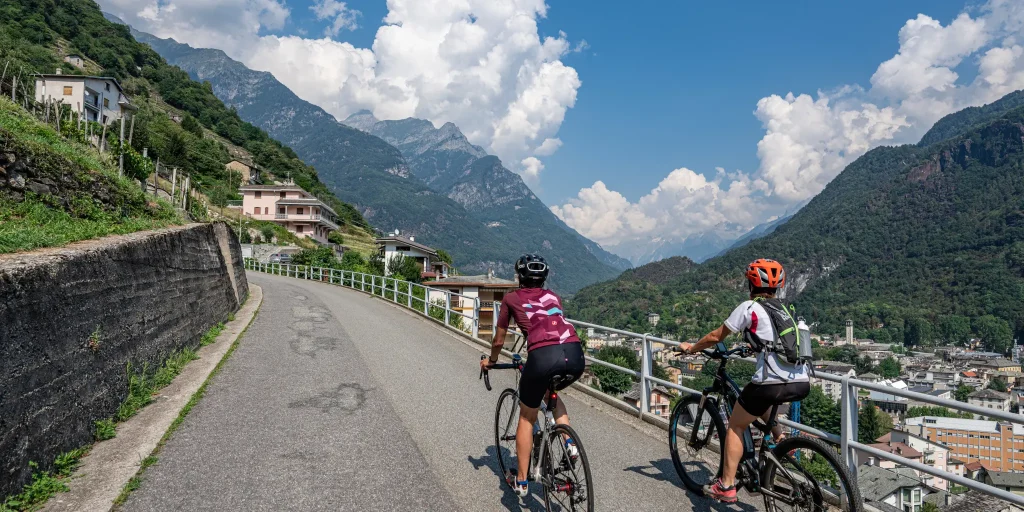
A walk through the streets of downtown Chiavenna to admire historic buildings, museums and stores is definitely a good idea before getting on the bike. Leaving the heart of the town, you begin to climb in altitude, facing a first sloping section at the height of the nucleus of Bette. It continues uphill alongside the […]
Chiavenna to Pianazzola
At the top, gathered in a few houses, stands the village of Pianazzola, sun-kissed even in winter and nestled in a scenic spot. The itinerary starts from the center of Chiavenna, nine are the hairpin bends and almost 5 km lead to the village, located at 635 m above sea level, offering a unique panorama: […]
Mese Ring – Sommarovina
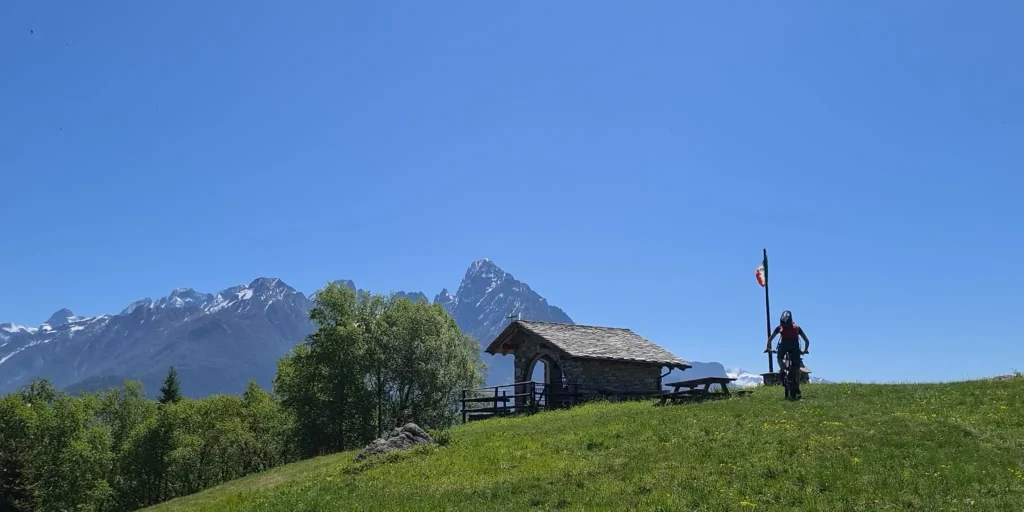
Starting from the Church of San Vittore in Mese, we enter Via Cappella Grande, skirting the important hydroelectric power plant. Keeping to the right, the road begins to climb into Via Madonna delle Grazie and continues into Via Motto. After about 250 m we turn right in the direction of Albareda. Restarting, the road continues […]

Hotel
Comfortable stays in the heart of Valchiavenna, combining hospitality, services and Alpine landscapes to experience in every season.

Bed & breakfast
Small properties and welcoming atmospheres to experience Valchiavenna simply, with authentic hospitality and a strong connection to the local area.

Holiday homes
Independent accommodation solutions to feel at home even on holiday and discover Valchiavenna at your own pace.

Mountain huts and campsites
Hospitality immersed in nature, among local traditions, mountain life and the pleasure of experiencing the area more closely.