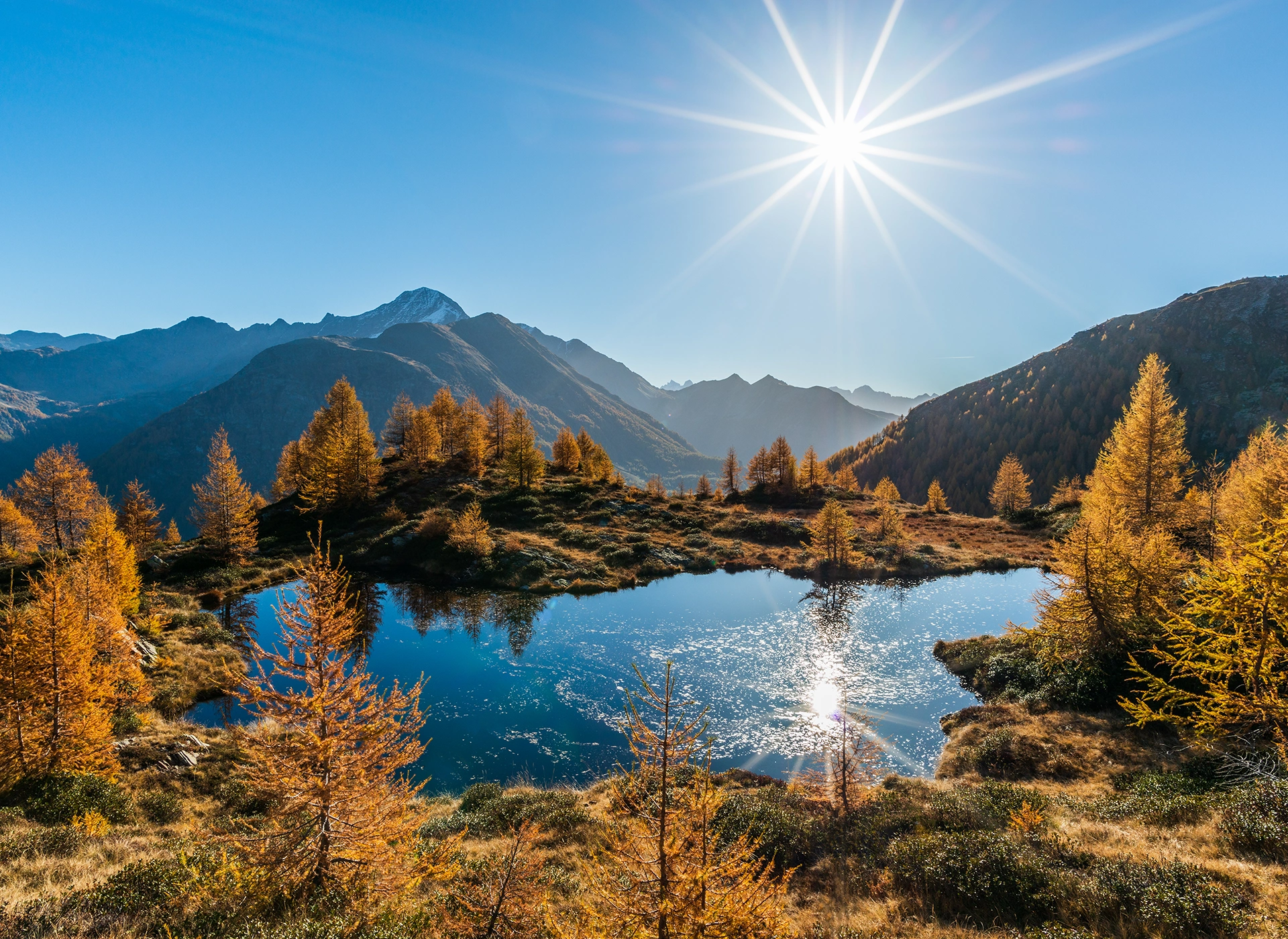
Enjoying the quiet of a typical alpine village, discovering an evocative place where traces of an intense and vital past still remain.
Alpine pastures are a world of their own, far from the tourist crowds, the chaos, and the traffic. Places of delicate beauty, rich in history and traditions worth preserving. This is one of the reasons they deserve special attention today, offering as they do an authentic glimpse into the life of the communities who lived the mountains in perfect symbiosy with this habitat, at the cost of great sacrifice.
Alpine amphitheater
Alpe Servizio, overlooking Campodolcino, is among the most representative alpine pastures of Valle Spluga. Until not many decades ago, every summer the inhabitants of the hamlets of Prestone, Pietra, and Portarezza would move their livestock up here — at nearly 2,000 meters of altitude — living for several months in what truly appears as a natural amphitheater nestled within the folds of the mountain.
The “carden”
The remains of the many now-ruined mountain huts testify to the fact that this was once an inhabited place. Piles of stones mark the presence of people, spread across several small clusters that still bear their old names today: Colvedro, il Motto, Corte S. Pietro, la Croce, and Servizio Basso. Building a hut or a hay barn meant knowing how to select and work the raw materials available on site — stone and wood — applying the ancient “Carden” building technique, already in use before Roman times.
The call of the mountain
Up here, nature reigns supreme. With a good pair of binoculars, it’s not uncommon to spot deer, ibex, chamois, and marmots in their natural habitat — specimens of alpine wildlife mingling with flora rich in scents and colors. Today, Alpe Servizio represents part of a touristic heritage worth preserving, one with strong ecological and educational significance.
Routes
There are two ways to reach Alpe Servizio. The first starts from Campodolcino, near Lake Portarezza. From here, the trail climbs along the right-hand bank, with an elevation gain of about 600 meters, for a hike of just over two hours. A longer but less steep alternative starts from Starleggia. After leaving the car in the parking area at the edge of the village, continue on foot toward San Sisto, keeping an eye out for the signs marking the turn to the south.
Piazza Caduti per la Libertà, 4
23022 Chiavenna (SO)
0343 37485
consorzioturistico@valchiavenna.com